
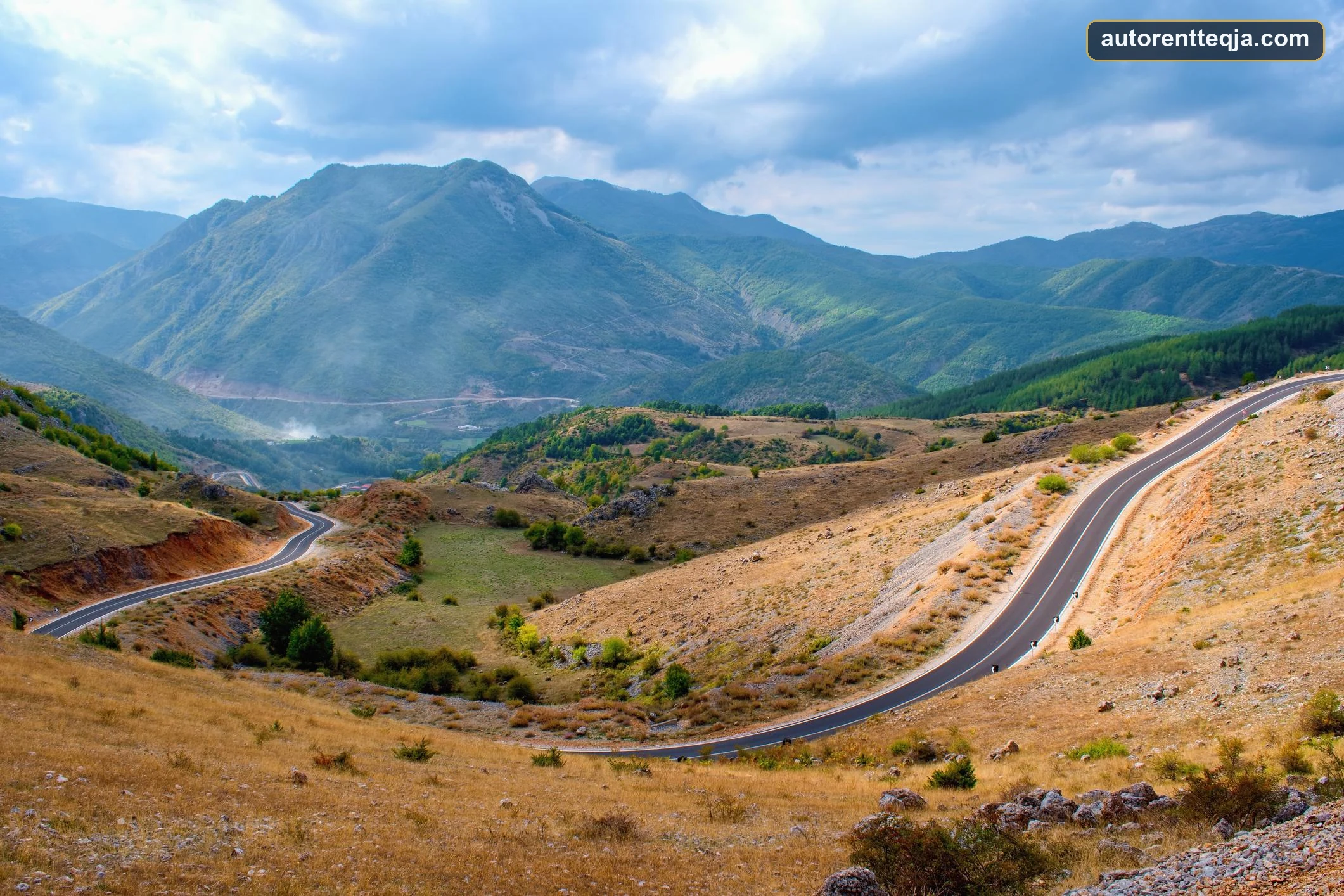
Planning to drive in Albania in 2026? A rental car is one of the easiest ways to explore Tirana, the Albanian Riviera, Berat, Gjirokastër and the northern mountains. Roads and driving conditions vary, however, so understanding the local rules before you start makes the journey safer and more relaxed.
This guide explains the documents tourists should carry, Albania's official speed limits, seat-belt and child-safety rules, parking, road conditions and what to do after an accident or breakdown. Local signs and police instructions always take priority over general guidance.
Quick advice: drive on the right, wear seat belts, keep your documents with you, never use a hand-held phone, follow posted limits and avoid alcohol completely before driving.
Can tourists drive in Albania?
Yes. Visitors can drive in Albania with a valid licence that covers the vehicle category they use. Under Article 133 of the Albanian Road Code, a foreign or international driving licence may be used while the holder has not been resident in Albania for more than one year.
If a foreign licence does not follow a recognised international format, the Road Code requires it to be accompanied by an official Albanian translation or equivalent document. Before travelling, check the requirements that apply to the country that issued your licence and ask your rental company if you are unsure.
Documents to keep in the car
Keep the following documents accessible during the rental:
- Your valid driving licence and, when required, an International Driving Permit or official translation.
- Your passport or national identity card.
- The rental agreement and the vehicle documents supplied at collection.
- Proof of insurance and the rental company's emergency contact details.
Before leaving the collection point, photograph the vehicle, confirm the fuel level, check the agreed security deposit and save the assistance number in your phone.
Official speed limits in Albania
Article 140 of the official Albanian Road Code sets these general maximum limits for passenger vehicles:
- 40 km/h in urban centres.
- 80 km/h on secondary and local interurban roads.
- 90 km/h on primary interurban roads.
- 130 km/h on motorways.
Posted signs can impose a different or lower limit, and road, weather or traffic conditions may require you to travel more slowly. Reduce speed near schools, pedestrian crossings, construction zones, villages, mountain bends and poorly lit roads. Albania's Road Police uses radar, smart monitoring equipment and other enforcement tools, so speed limits should be treated seriously.
Are there speed cameras and police checks in Albania?
Yes. Drivers should expect speed enforcement on urban roads, interurban routes and major tourist corridors. The Albanian State Police uses mobile radar, intelligent monitoring equipment, police patrols and, on some operations, drones or unmarked vehicles. A camera or patrol may not always be visible before a speed check.
Always follow the posted limit rather than relying on navigation-app warnings. Limits can change near villages, junctions, roadworks, tunnels and pedestrian areas. In August 2026, the State Police again confirmed intensified checks for speeding, mobile-phone use, seat belts, alcohol, pedestrian priority and illegal parking. See the latest road-safety notice from the Albanian State Police.
- Slow down as soon as a lower-limit sign appears.
- Do not assume that foreign-registered or rental vehicles are exempt from fines.
- If police ask you to stop, pull over safely and present the vehicle and driver documents.
- Contact the rental company if you receive a notice or are unsure about the correct procedure.
Essential safety rules
Do you drive on the right or left in Albania?
Traffic drives on the right-hand side and overtaking is normally on the left. Stay in your lane, use indicators early and do not overtake where visibility is limited or road markings prohibit it.
Seat belts and child restraints
The driver and passengers must use seat belts whenever the vehicle is moving. Children must travel in an approved restraint suitable for their age and size. Tell the rental company in advance if you need a child seat so that the correct equipment can be prepared.
Mobile phones
Do not hold or use a phone while driving. Set navigation before departure and use a secure hands-free system only when it does not distract you. Stop in a safe, legal place if you need to change the route or make a call.
Alcohol and driving
Albanian law applies penalties at low blood-alcohol levels and more serious sanctions as the level increases. The safest and simplest rule for every visitor is zero alcohol before driving. If you plan to drink, arrange another driver or use a taxi.
Road conditions and route planning
Main routes between Tirana, Durrës, Shkodër, Vlorë and other major destinations are generally straightforward, but conditions can change quickly outside larger centres. You may encounter narrow roads, unfinished sections, sharp mountain bends, farm vehicles, cyclists or animals. Night driving can be more demanding where lighting and road markings are limited.
- Download offline maps before long journeys.
- Allow extra time instead of relying only on the distance shown by navigation.
- Check the weather before mountain or winter routes.
- Avoid unfamiliar remote roads after dark when possible.
- Choose a vehicle that suits the route, luggage and number of passengers.
If you are arriving by air, review our practical guide to car rental at Tirana Airport. For the capital, see our complete parking in Tirana guide and the Tirana car rental fleet.
Summer traffic and busy tourist routes
Traffic becomes heavier during the main summer season, especially on routes connecting Tirana, Durrës, Vlorë, the Riviera, Sarandë, Shkodër and coastal destinations. Weekend departures and returns can take longer than the distance alone suggests.
For summer 2026, the Albanian State Police announced seasonal restrictions for heavy vehicles on selected tourist routes to improve traffic flow and road safety. Rental cars are not the target of those heavy-vehicle restrictions, but the announcement is a useful reminder that busy periods require extra time and careful route planning. Check current summer traffic information before a long journey.
- Leave early for airport returns and time-sensitive journeys.
- Avoid planning several long coastal stops on the same day.
- Keep fuel, water and offline navigation ready before remote sections.
- Ask for route advice if your itinerary includes mountain or unpaved roads.
Roundabouts and local traffic
Approach every roundabout slowly, read the signs and lane markings, and give priority as indicated. Do not assume another driver will signal correctly. Keep a safe gap, avoid sudden lane changes and make eye contact with pedestrians at crossings.
Traffic in central Tirana can be busy during weekday mornings and late afternoons. A calm, defensive driving style is more useful than trying to match the pace of local traffic.
Parking in Tirana and tourist areas
Use marked public spaces, official car parks or accommodation parking whenever possible. Always check nearby signs, road markings, payment instructions and time restrictions. Do not block entrances, pavements, pedestrian crossings, bus stops or access for emergency vehicles.
In historic centres and coastal towns, spaces can be limited during summer. Reserve accommodation with parking or ask your rental team for a suitable parking option before arrival. Never leave passports, money, electronics or visible luggage inside an unattended vehicle.
Fuel, tolls and long-distance travel
Fuel stations are common around cities and along principal roads, but they are less frequent on remote routes. Refill before entering mountain areas and confirm the correct fuel type at vehicle collection. Keep a payment card and some Albanian lek available because payment options can vary.
Some routes may include tolls or controlled road sections. Follow current signs and official instructions rather than relying on old online prices, as road arrangements can change.
What to do after an accident or breakdown
Stop safely, switch on hazard lights and protect the scene without putting yourself in danger. Call 112 for police or emergency assistance when anyone is injured, the road is unsafe, there is disagreement or official help is required. Contact the rental company immediately and follow its instructions before arranging repairs, towing or replacement transport.
Take clear photos, record the location and exchange identification, vehicle and insurance information with the other party. Article 187 of the Road Code requires drivers involved in an accident to stop. When there is material damage only, avoid unnecessarily blocking traffic where it is safe to do so and notify the relevant insurer.
Choosing the right rental car
A compact car works well for Tirana and paved city-to-city routes. A larger vehicle may be more comfortable for families, luggage or longer journeys, while mountain travel may require more ground clearance and careful route planning. The best choice depends on the complete itinerary, not only the daily price.
Compare available vehicles, transparent rental terms and pickup options on our Search Your Car page. If you are unsure, send us your route and passenger details before booking.
Frequently asked questions
Do I need an International Driving Permit in Albania?
It depends on the format and issuing country of your licence. A recognised foreign or international licence can be used by eligible visitors, while licences outside recognised formats may need an official Albanian translation or equivalent. Confirm the requirement before travel.
Is driving in Albania difficult for tourists?
Most visitors manage well on main routes when they drive defensively, allow extra time and avoid unfamiliar remote roads at night. Congested city traffic and narrow mountain roads require more attention.
Can I drive a rental car across the border?
Only with prior permission from the rental company and the correct cross-border documents and insurance. Never cross a border without written confirmation in your rental agreement.
What number should I call in an emergency?
Call 112 for emergency assistance in Albania, then contact the rental company's support line as soon as it is safe.
Should I drive at night?
Night driving is possible, but extra caution is needed on poorly lit, rural or mountain roads. Plan to complete unfamiliar long-distance routes in daylight when possible.
Final checklist before you drive
- Valid licence, identification, rental agreement and insurance documents.
- Seat belts fastened and children in the correct restraint.
- Navigation prepared, phone stored and route checked.
- Fuel type, emergency contacts and return conditions confirmed.
- No alcohol, enough time and a calm defensive driving style.
Official sources: Albanian Road Code (DPSHTRR) and Albanian State Police road-safety information. Last reviewed: 28 August 2026. This article is practical travel guidance; always follow current signs, police instructions and your rental agreement.
Content protection notice. © 2020–2026 Auto Rent Teqja. This original article was first published on autorentteqja.com. Short quotations require clear attribution and a link to the original page. Full republication, automated scraping, removal of watermarks or commercial reuse is not permitted. See our Copyright & Content Use Policy.